Exhibitor Information
今週末より東京・南青山で開催される『DESIGNTIDE TOKYO 2025』へ出展します。


By Pass | Design Project
私たちの仕事は、建築や空間のデザインを通して「場所」をつくることにあります。その過程では、共に考え、共に悩み、関わる人々と共に形を探る――そのプロセスそのものに大きな重きを置いています。
新たなレーベル「By Pass」から発表するプロダクトは、プロジェクトの設計過程の中で、ごく自然に生まれたものです。流れを読み、関係を整え、プロセスを導く。「By Pass」とは、人や出来事をやさしくつなぎ、その場に最もふさわしい形を引き出す働きの総称です。
今回発表する照明と椅子は、いずれも場づくりの過程で求められ、生まれたものです。「八女提灯照明」は、福岡県八女に息づく「八女提灯」の200年にわたる歴史と技術に着想を得たもの。また「天水チェア」は、戦後日本の復興期から地域の「あったらいいな」という声に応え続けてきた福祉法人の利用者による特技、「草鞋編み」から着想を得ています。
Our work lies in creating “places” through architectural and spatial design. In this process, we place great importance on thinking together, struggling together, and exploring forms in dialogue with everyone involved. The value is found not only in the final outcome but in the collaborative process itself.
The products presented under our new label “By Pass” were born quite naturally within the course of various design projects. Reading the flow, shaping relationships, and guiding the process—By Pass refers to the gentle act of connecting people and circumstances, drawing out the form most suited to each place.
The lighting and chair we are introducing this time also emerged from such moments within the making of place. “Yame Lantern Lighting” is inspired by the 200-year history and craftsmanship of Yame Chōchin, a traditional lantern craft rooted in Yame, Fukuoka. “Tensui Chair” draws from the technique of waraji (straw sandal) weaving, a skill practiced by users of a local social welfare organization that has long responded to the community’s practical needs since Japan’s postwar recovery period.
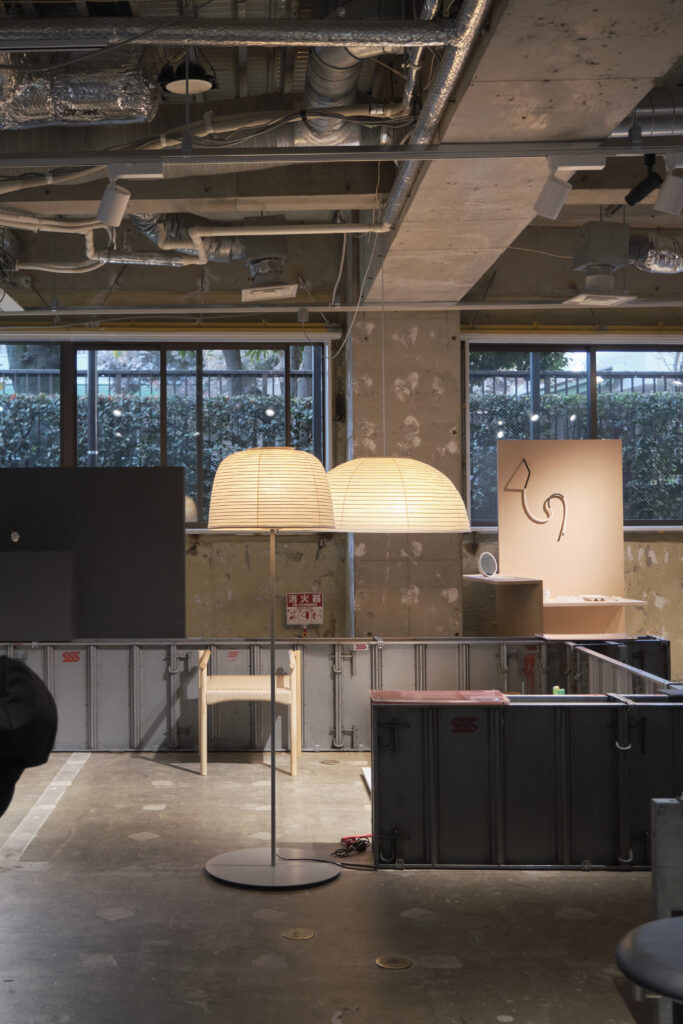
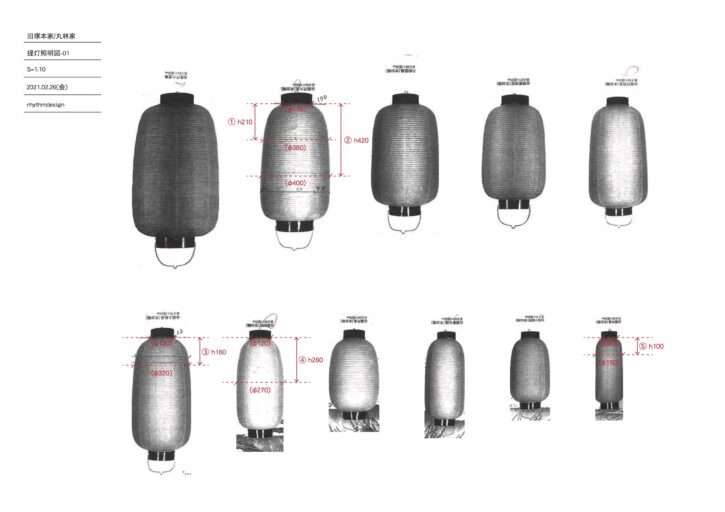
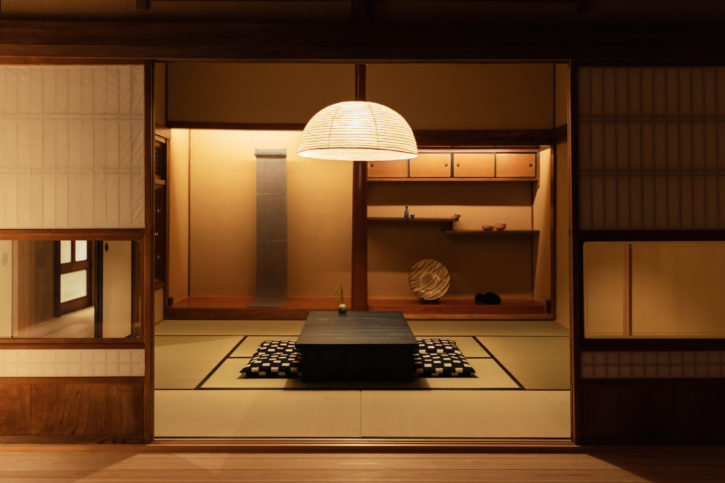
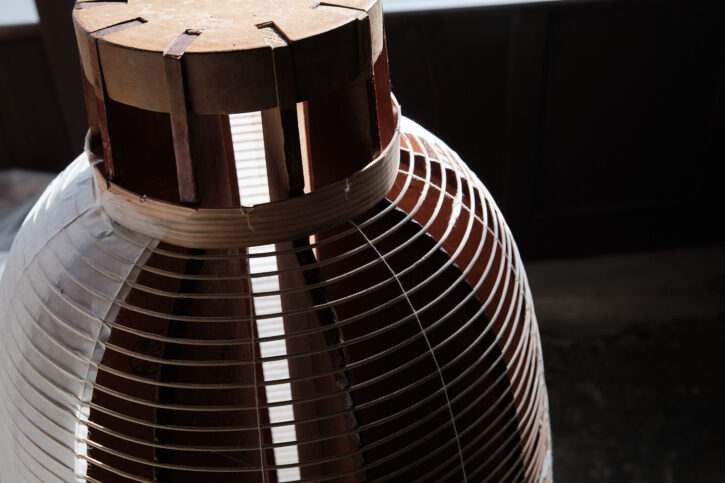
地域の伝統工芸を保存・紹介する宿のためにデザインされた照明器具です。その形は、伝統的な八女提灯の形状を逆さにしたことから着想を得ています。表面は、伝統的な和紙の原料である楮(こうぞ)の繊維から手作業で作られた手漉き和紙で覆われています。
A series of lighting fixtures designed for an inn dedicated to preserving and sharing local traditional crafts. The forms are inspired by inverting the shape of the traditional Yame lantern. The surface is covered with handmade washi paper, crafted from the fibers of the traditional paper mulberry tree (kajinoki).
デザイン|リズムデザイン
協働|ブランチライディングデザイン
照明機能部製作|ライディング創
提灯制作|伊藤権次郎商店(伊藤博紀)
和紙|名尾和紙(谷口弦)
施主|UNAラボラトリーズ
Design: rhythmdesign Ltd.
Collaboration: BRANCH LIGHTING DESIGN
Functional Components: LIGHTING SOU
Lantern: Ito Gonjiro Shoten
Washi Paper: Nao Handmade Washi
Client: UNA Laboratories
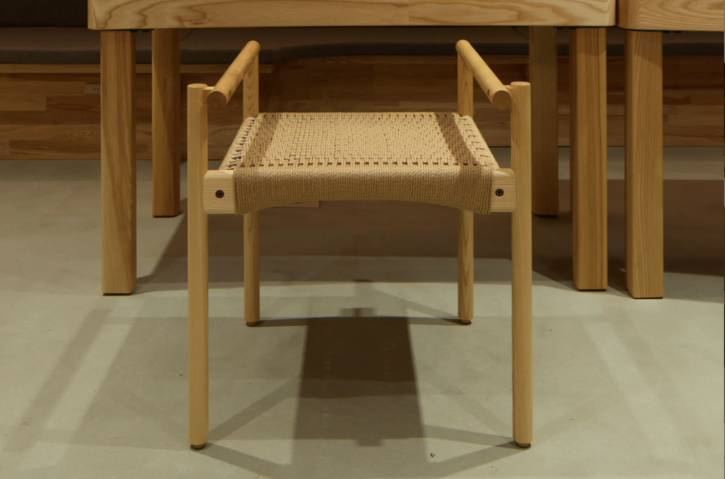
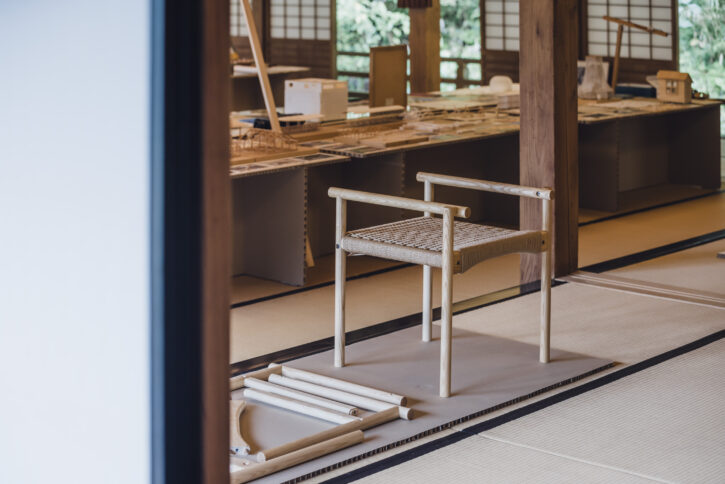
この軽量のアームチェアは、アッシュ材と紙コードで作られています。熊本の福祉法人の、障がいのある入居者の一人が持つ卓越したロープ編みの技術に着想を得ており、入居者自身が組み立てられるよう設計されているため、彼らの手仕事が空間に反映されます。
This lightweight armchair, made of ash wood and paper cord, was designed for a care facility in Kumamoto. Inspired by the exceptional rope-braiding skills of one of the residents with disabilities, it is designed to be assembled by the residents themselves, bringing their craftsmanship into the space.
デザイン|リズムデザイン
木製フレーム制作|平田椅子
施主|社会福祉法人 天水福祉事業会
Design: rhythmdesign
Frame Production: Hirata Chair
Client: Tensui Social Welfare Org.
PRODUCT01 | Yame Lantern Light
PRODUCT02 | Tensui Chair
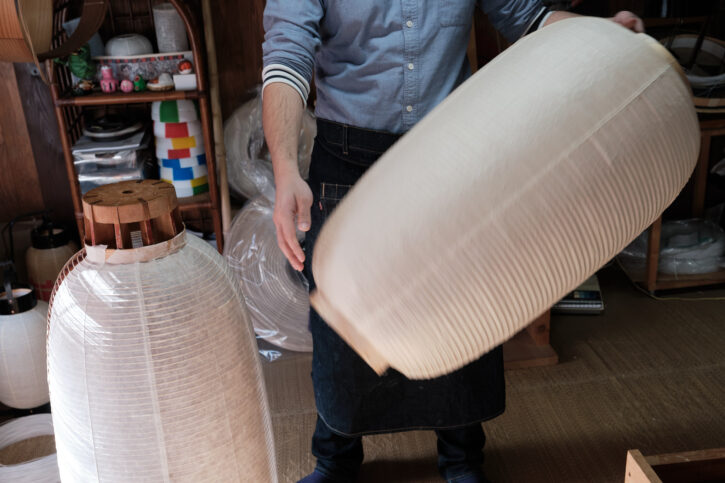
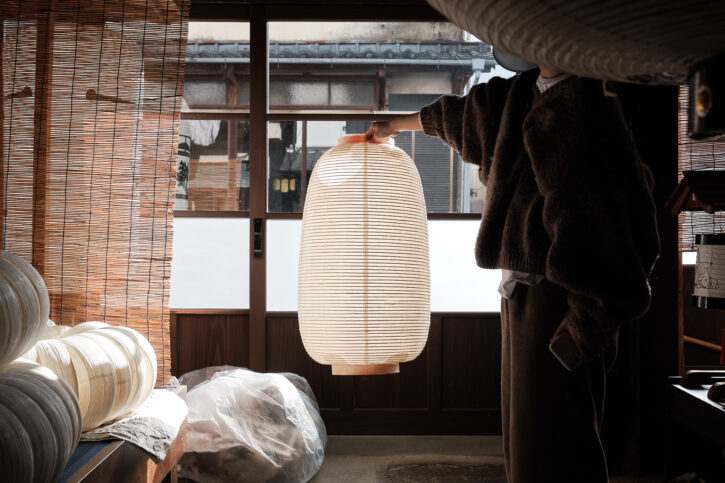
福岡・八女の伝統的な建物を改修するプロジェクトで、新しい提灯型の照明をつくる機会を得ました。伊藤権次郎商店の八代目当主、伊藤弘樹さんと一緒に取り組むことになっていました。初めて工房を訪れた際、デザイン案を携えた上で臨みましたが、結局デザイン案を伊藤さんに見せることはありませんでした。対話を重ねる中で、私たちが率先して新しい造形を描く必要がないと感じたからです。
伝統的な提灯の形を見ると、下の曲線は上よりもやわらかく丸くなっています。この微妙な変化によって視覚的な重心が少し上がり、描かれた文字が空に向かって浮かび上がるように見えます。提灯はもともと縁起物とされ、300 年以上の時間をかけて形が少しずつ洗練されてきました。それは積み重ねられた技と時間の成果であり、特定のデザイナーが生み出したものではありません。
このプロジェクトでは、伝統的な提灯の曲線の自然な美しさをそのまま生かし、やさしく表現する照明をつくることを目指しました。
When I was a child, it seemed that my father, a carpenter, carried out every step of building a house entirely on his own. There were no designers or architects present. It was a world of making that appeared to function without design—or at least without designers. And that world undeniably existed. So then, what is it that we design?
In a project to renovate a traditional building in Yame, Fukuoka, I had the opportunity to create a new lantern-style light fixture. I was to collaborate with Hiroki Ito, the eighth-generation head of Ito Gonjiro Shoten. On the day we first met, I brought design sketches intending to propose a new form for the lantern. But in the end, I chose not to show them. I felt it would be wrong to impose design so casually onto something like a lantern.
Looking closely at the form of a traditional lantern, you notice that the bottom curve is more gently rounded than the top. This subtle shift raises the visual center of gravity, creating the illusion that the characters painted on it are rising toward the sky. Lanterns were originally considered auspicious objects. Over the course of more than 300 years, their shape has been refined into its present form. It is the result of accumulated skill and time. There is no individual designer behind it.
In this project, I sought to create lighting that preserves and expresses the natural beauty of the traditional lantern’ s curves just as they are.
私たちは5 年前、熊本県玉名市の天水社会福祉法人と協働を始めました。1953 年、第二次世界大戦直後に設立された同法人は、当初は保育園からスタートし、それ以来地域に密着した福祉サービスを提供し続けています。子育て支援、障がい者支援、高齢者ケアの境界を超えてつながるシームレスなサービスが特徴です。
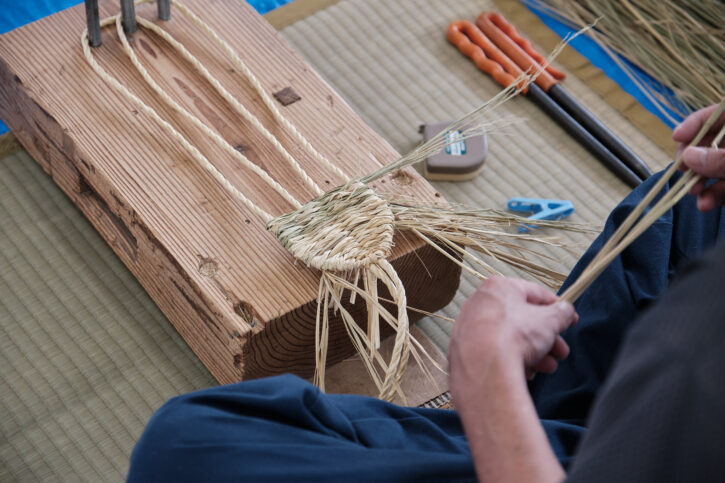
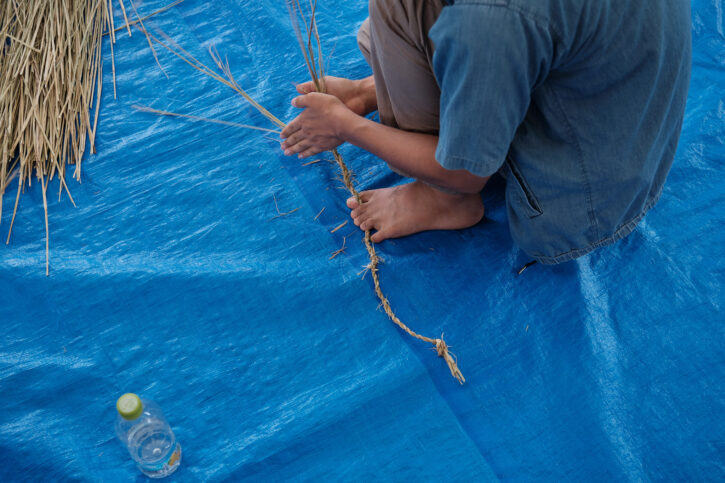
ある時、障がいを持って暮らす入居者の一人、よしあきさんの卓越した技術に気づきました。彼の得意技は、藁の縄を使ってわらじ(伝統的な草履)を編むことです。その手仕事だけでなく、足や道具の使い方まで非常に熟練していました。私も同じ工程を真似してみましたが、彼の技には到底及びませんでした。
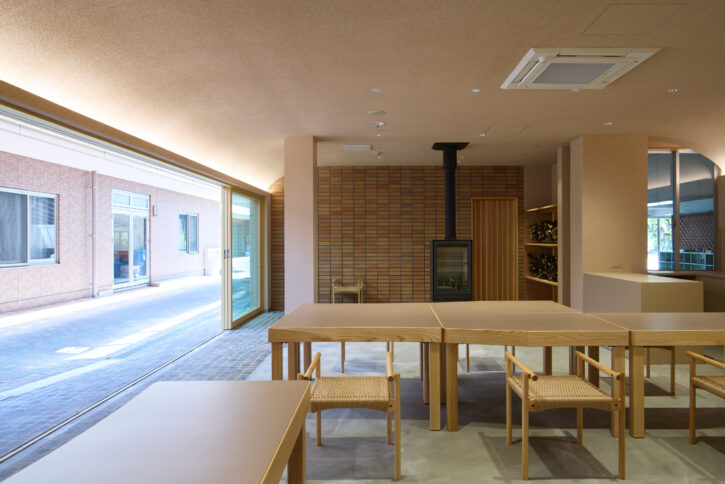
2023 年、施設の一部が改修されることになり、町全体に開かれたリビングルームのような共有空間をつくることが目標となりました。話し合いの中で「自分たちだけのオリジナルチェアがあったらいいのでは?」という声が上がり、私たちはそのデザインをサポートすることになりました。
チェアのフレームは、入居者自身が組み立てられるように設計され、座面は紙コードで編まれています。購入者は、部品を購入して自分で組み立てることも、良明さんが編んだ完成品を購入することもできます。佐賀の平田椅子の技術支援により、最終製品は丁寧で信頼できるものに仕上がりました。このデザインを通して、良明さんの技術は「作品」の形となりました。むしろ、彼の手仕事こそがデザインそのものを決定したと言えるでしょう。
We began working with Tensui Social Welfare Organization in Tamana,Kumamoto Prefecture, five years ago. Established in 1953, shortly after World War II, they started with a nursery school and have since continued to serve the community, providing seamless welfare services that bridge the boundaries between child care, disability support, and elder care.
At one point, we noticed the remarkable skill of one of the residents, Yoshiaki, who lives with a disability. His specialty is weaving waraji—traditional straw sandals—using rice straw rope. His mastery extended beyond handwork to skillful use of his feet and tools. I tried to mimic his process, but my result didn’ t come close to his craftsmanship.
In 2023, a portion of the facility was scheduled for renovation. The aim was to create a shared living-room-like space open to the entire town. During discussions, someone suggested, “Wouldn’ t it be nice if we had our own original chair?”—and we were invited to support the design.
The chair’ s frame was designed so that residents could assemble it themselves, and the seat is woven with paper cord. Buyers can either purchase the parts and assemble the chair on their own or buy a completed version woven by Yoshiaki. With technical support from Hirata Chair in Saga, the final product is well-crafted and reliable. Through this design, Yoshiaki’ s skill became a form of work. In fact, it could be said that his craftsmanship determined the design itself.