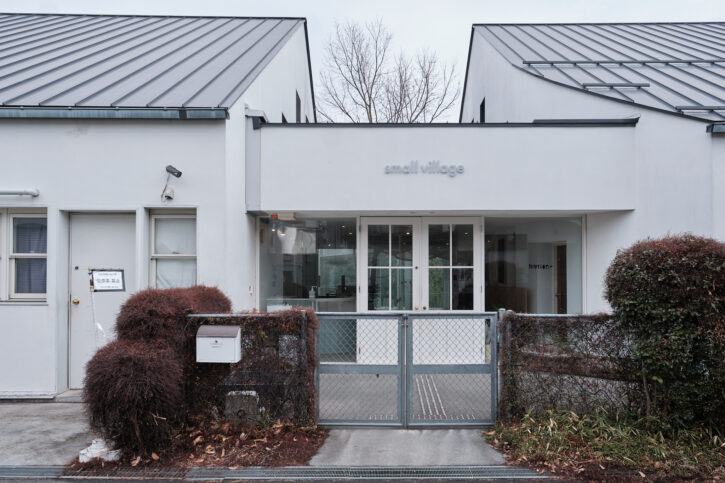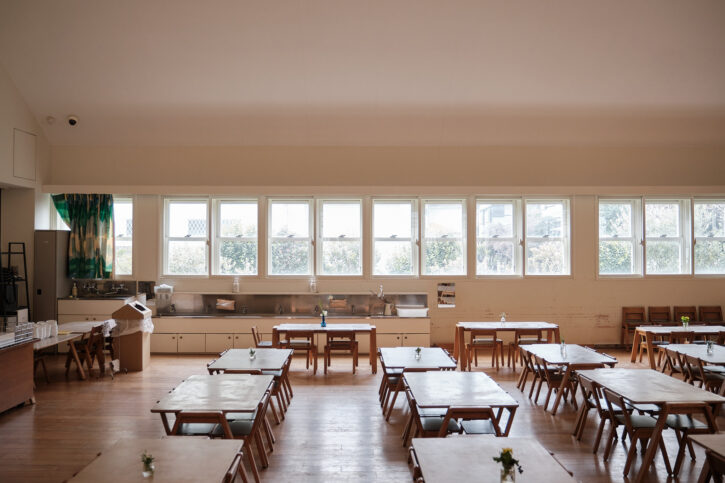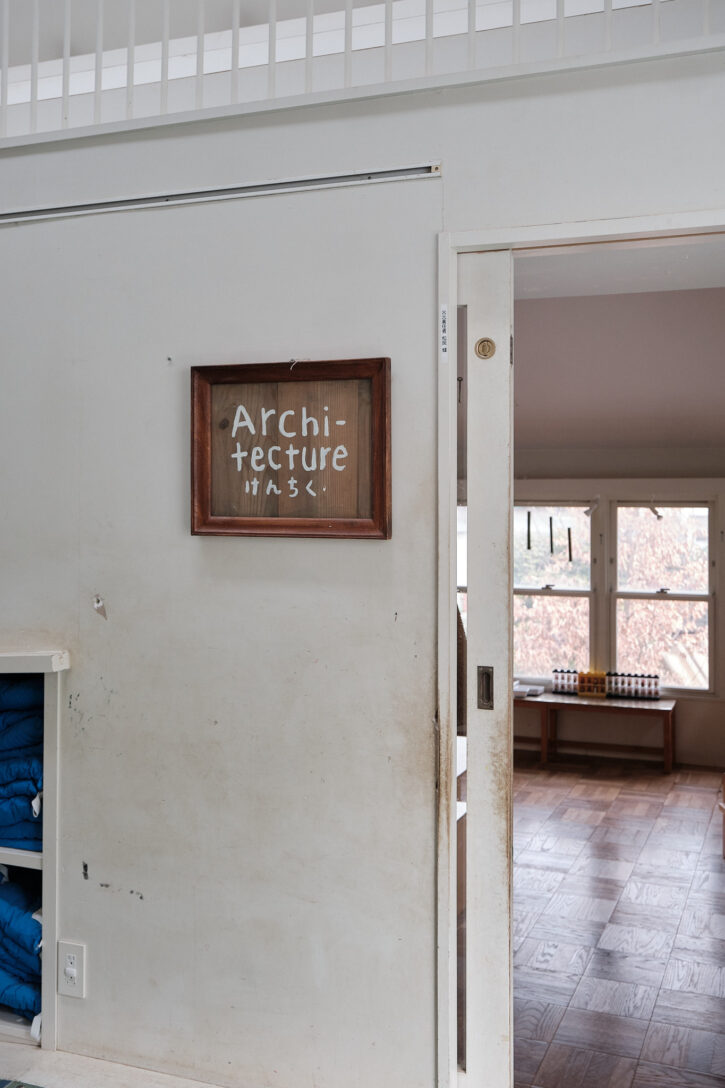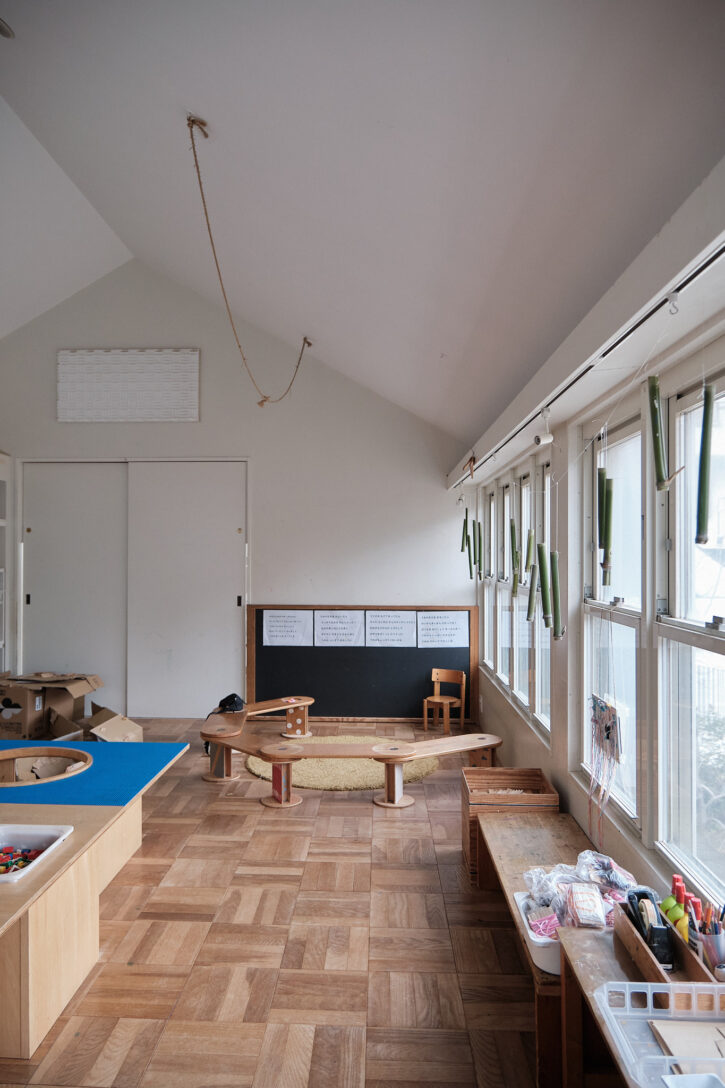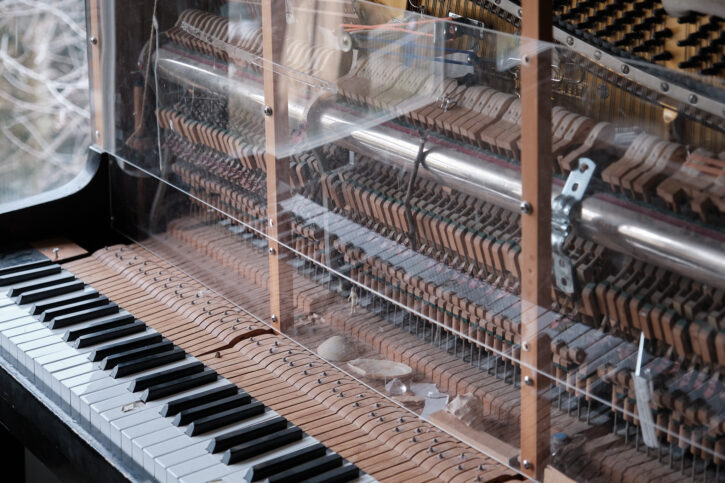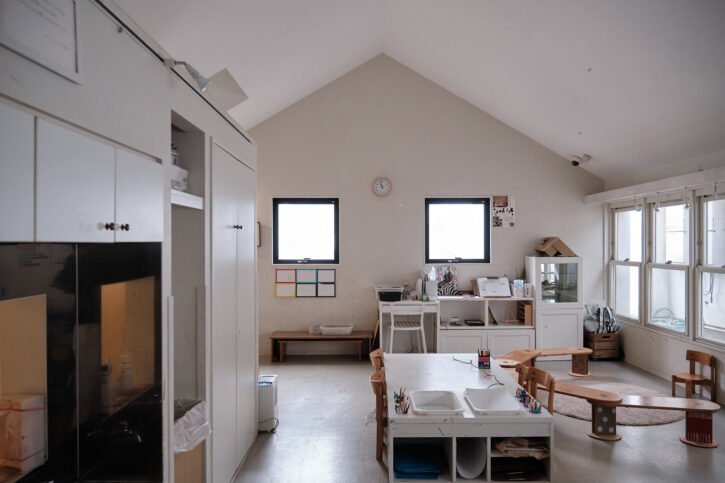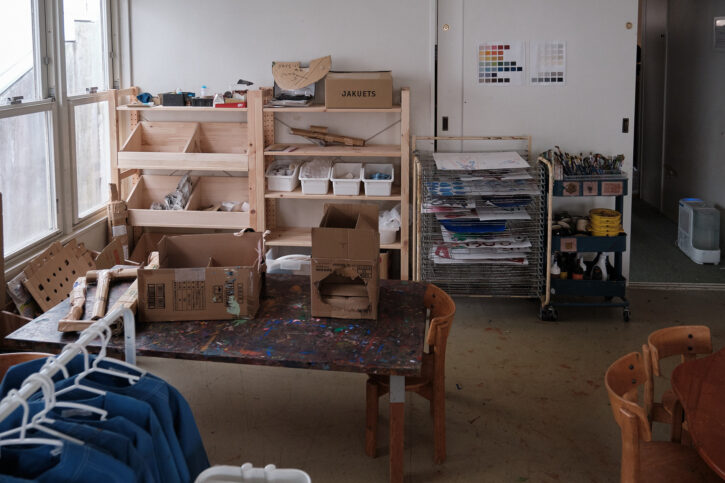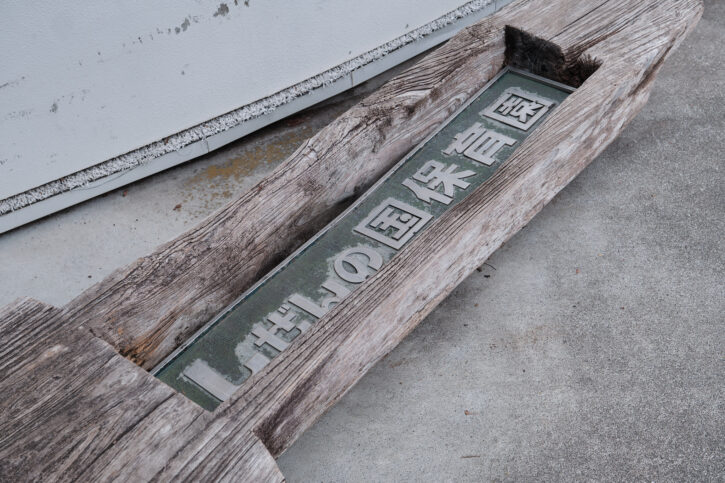
先日、東京都町田市にある しぜんの国保育園/small village を訪れました。
熊本県玉名市天水町で進めている、天水福祉事業会さんの浸水被害による災害復旧工事を進めるにあたり、改めて一緒にさまざまな場所を訪れてみようと、視察に伺いました。
しぜんの国保育は、大人もこどもも安心できる村のような居場所をつくろうと、長年にわたって場づくりを続けてきた保育園です。その取り組みは町田から始まり、今では都内各所へと広がっています。
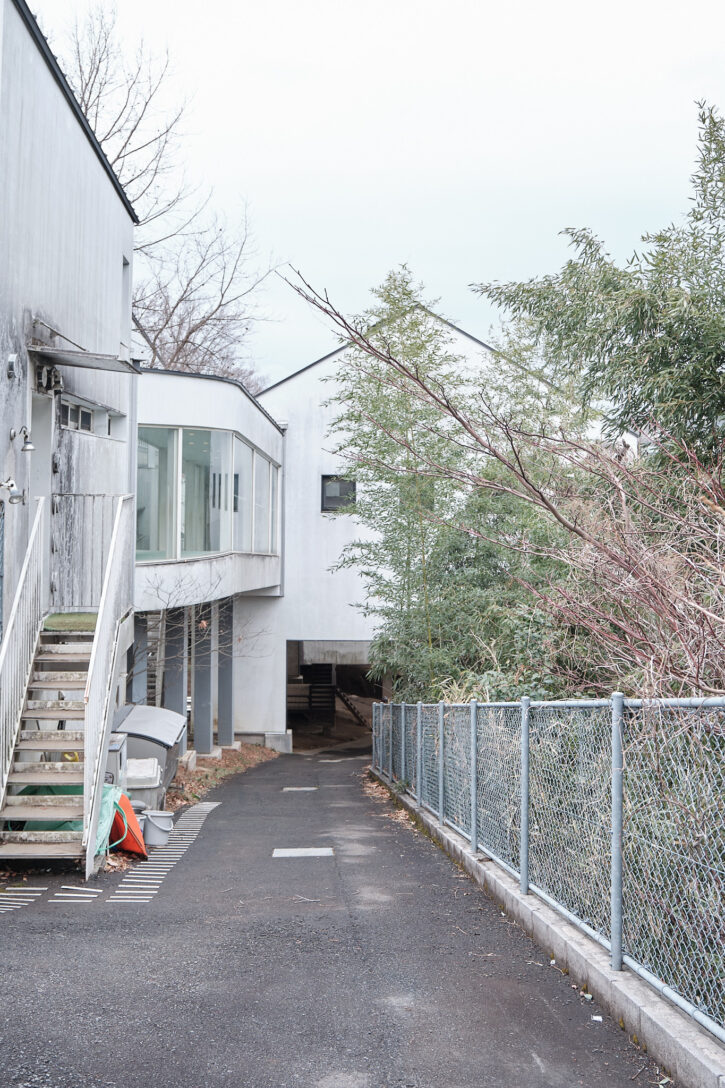
今回訪れた町田の園舎は、旧園舎の老朽化に伴い、旧園舎を残したまま敷地内に新たに建てられた新築の園舎です。敷地は小さな谷のような地形にあり、前面道路側の斜面に新園舎が建てられ、旧園舎と新園舎が園庭を挟んで向かい合うように配置されています。二つの建物が互いに向き合いながら、そのあいだに園庭という居場所を抱えているような構成です。
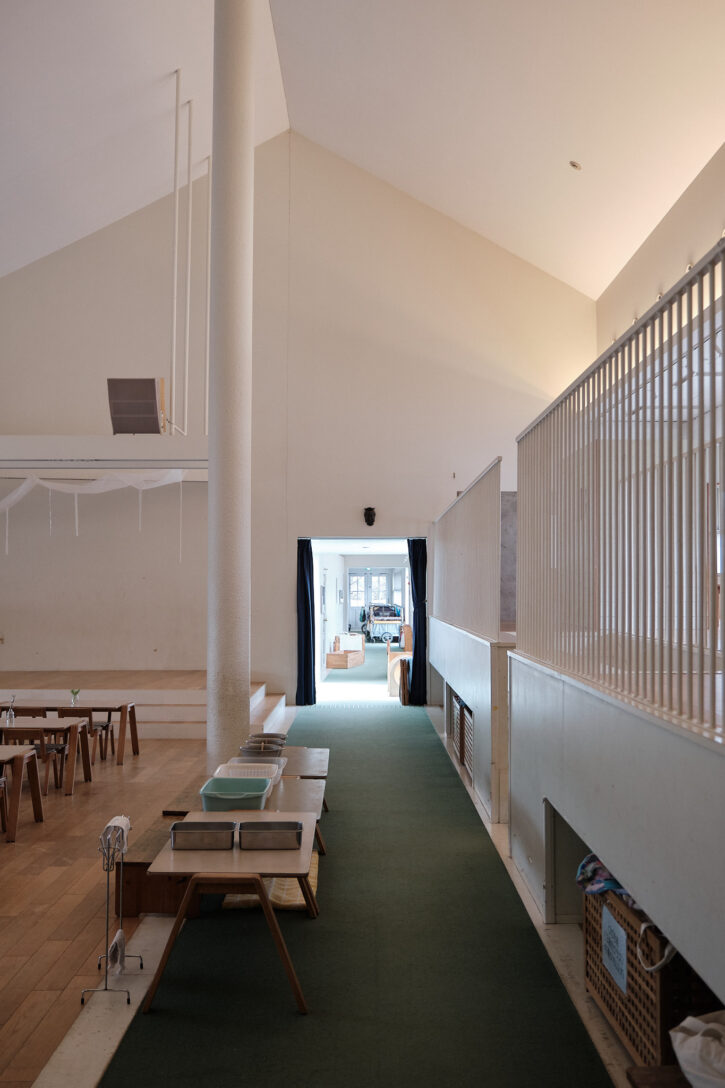
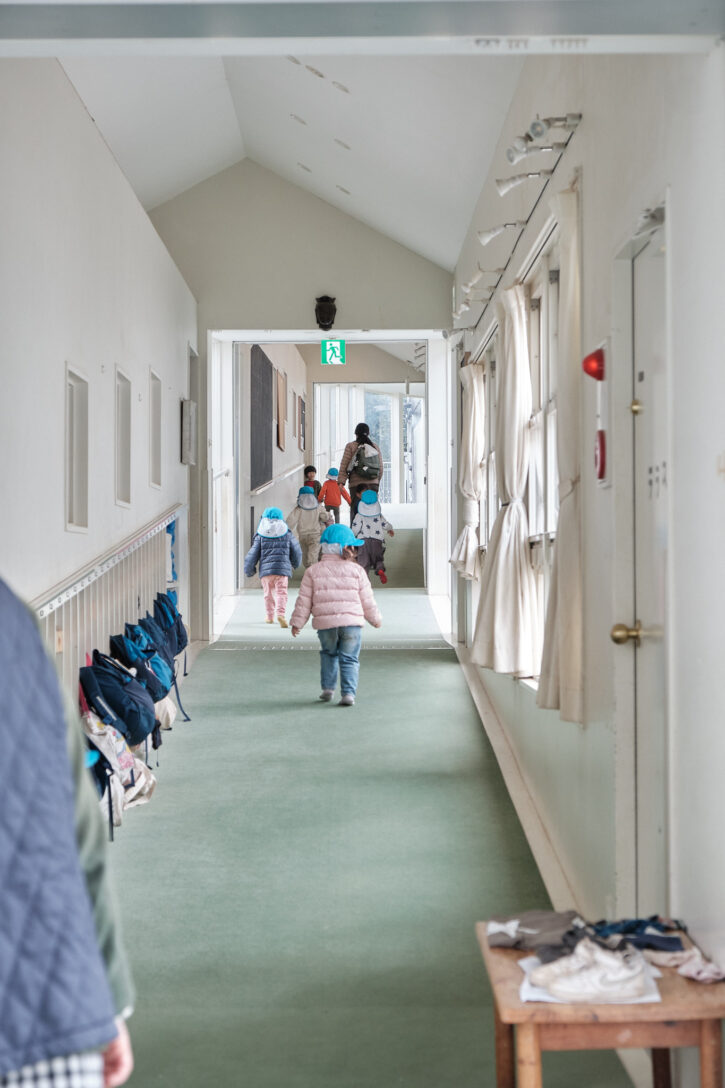
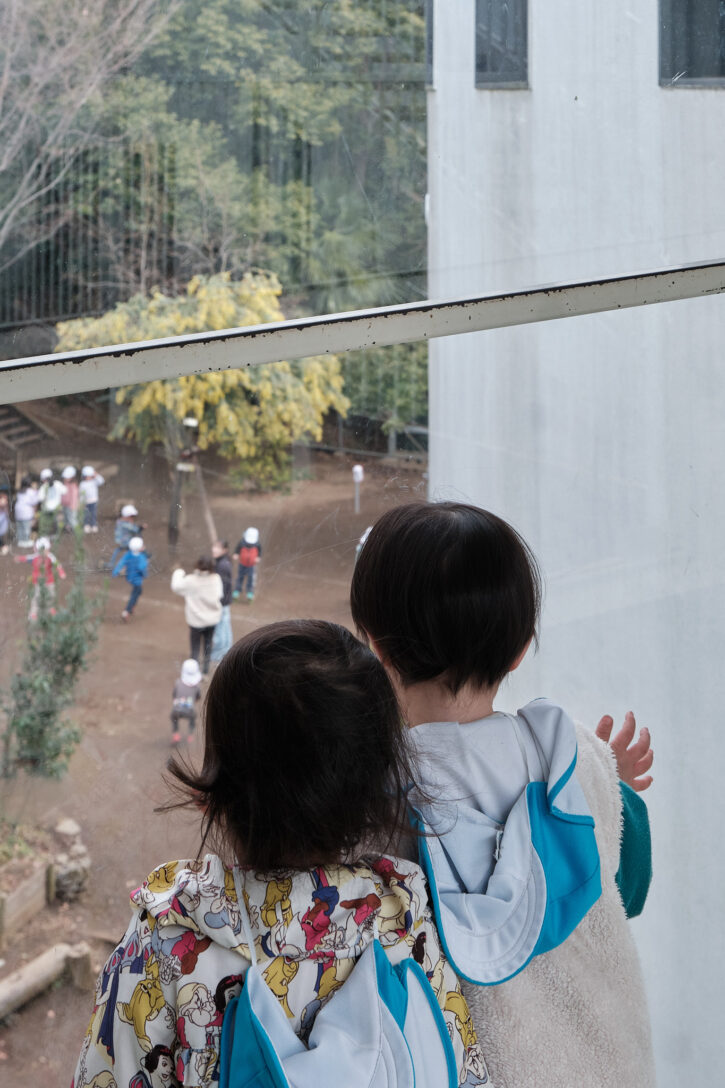
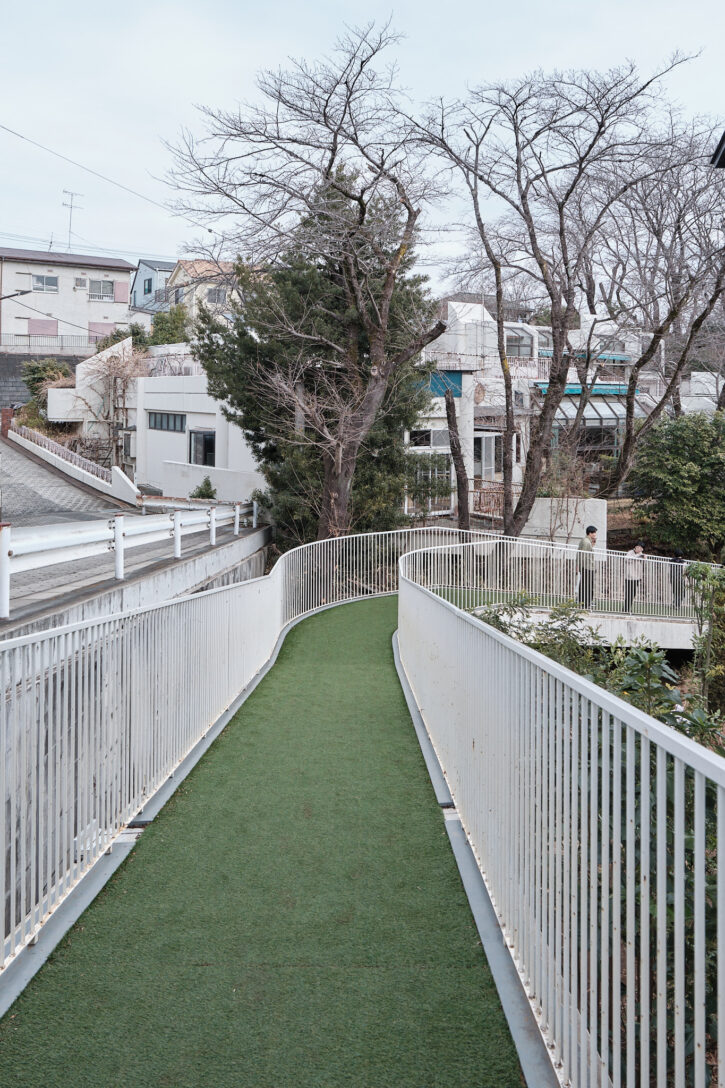
園庭は近隣の公園とも連続しており、周囲の樹木や地形に包まれながらも、どこか外へと開かれた雰囲気を持っています。建物は一本の山道のようなスロープによってつながり、ゆるやかに高低差を結んでいます。そのスロープ状の廊下はそのまま屋外へと延び、ブリッジとなって園庭へと続いていきます。
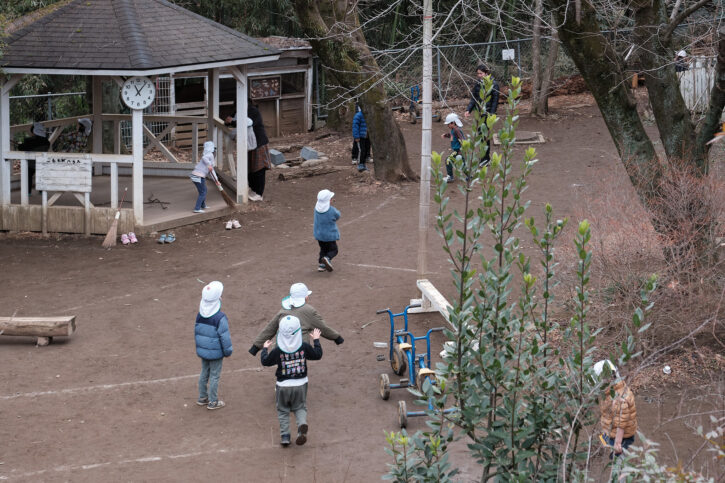
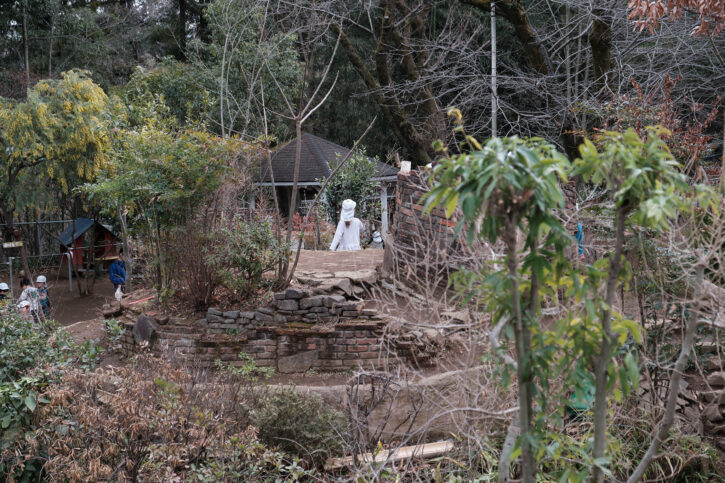
園長の齋藤美和さんが案内をしてくださり、園庭に降り立ったとき、驚いたことがありました。とても多くの子どもたちが、それぞれ自分のやりたい遊びに夢中になっていたことです。
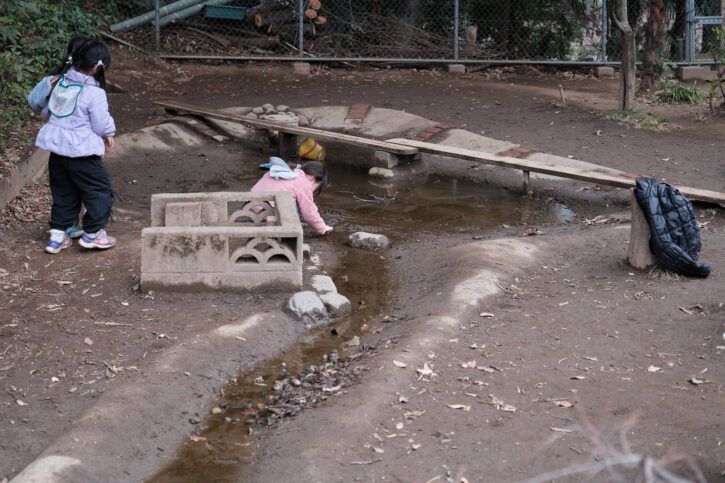
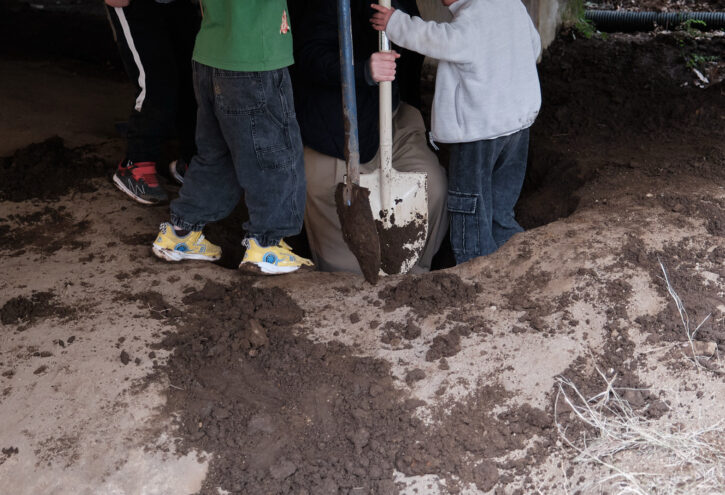
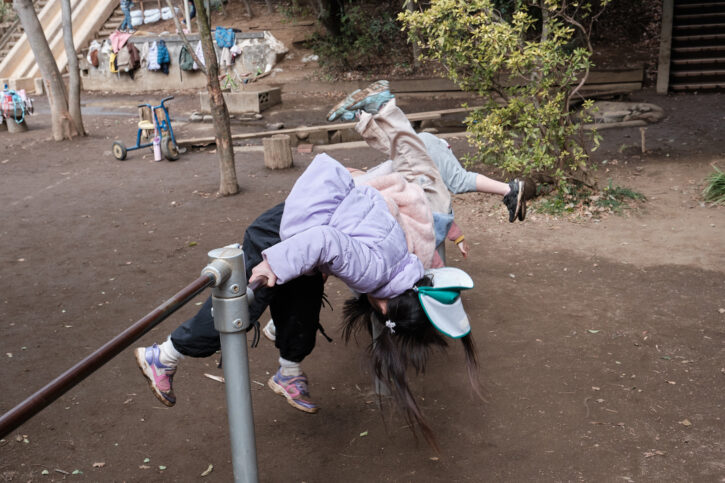
鉄棒をしている子、林の中に隠れている子、水たまりで泥団子をつくっている子、小さな山に登って土遊びをしている子、バギーに乗っている子、小さな小屋でままごとをしている子。同じ場所にいながら、それぞれが違う時間を過ごしています。
園庭の中央にある築山に登り、園庭全体を見渡しているとき、ふと気づいたことがありました。
子どもたちと話しながらその築山に登り、そこから初めて会ったはずの大人や子どもと一緒に園庭を見渡しながら会話をしていました。もしこの築山が「子どものための遊具」としてつくられていたら、どうだったでしょう。おそらく大人は下から子どもたちを見守ることになり、同じ場所に立ち、同じ目線で園庭を眺めながら言葉を交わす時間は生まれなかったかもしれません。
とても些細な出来事ですが、「大人もこどもも」という、園が目指してきた居場所のあり方を体現しているように感じました。
最後に理事長の 齋藤紘良さん とお話しする機会がありました。その時に、「私たちは500年後を想像している」 と話してくれました。
5年先や10年先、あるいは20年先を考えると、どうしても「あれもやらなければ、これもやらなければ」と焦りや自我が生まれてしまう。しかし、500年という時間のスケールで考えてみると、いま行っている働きや活動が、その未来とどのようにつながっているのかという問いが立ち上がってきます。そうした視点に立つことで、自分たちの存在の小ささと同時に、本当に向き合うべきことの輪郭が少し見えてくるのかもしれません。
これから長く続く災害復旧に向き合い、歩みを続けていく天水の皆さんにとって、その言葉は、そっと背中を押すお土産のような言葉だったのではないかと思います。
⸻
A visit was made to Shizen no Kuni Nursery / small village in Machida, Tokyo. The trip was part of a series of visits to different places while working on the flood recovery project of Tensui fukushi jigyokai in Tamana, Kumamoto.
Shizen no Kuni has long pursued the idea of creating a village-like place where both children and adults can feel safe and at ease. What began in Machida has gradually expanded to other parts of Tokyo.
The Machida campus includes a new nursery building constructed while preserving the old one, which had aged. The two buildings stand facing each other across a courtyard, embracing it as the heart of the place. The courtyard is connected to a nearby public park and is surrounded by trees and terrain, giving it a sense of openness within a protected landscape.
The buildings are connected by a gently sloping ramp resembling a mountain trail. The ramp continues outward and becomes a bridge that leads directly into the courtyard.
Upon entering the courtyard, the most striking impression was seeing many children engaged in different kinds of play at the same time. Some were on the horizontal bars, some were hiding in the woods, some were making mud balls in puddles, others were climbing a mound, riding a buggy, or playing house in a small hut. Each child seemed to inhabit their own moment within the same shared space.
While standing on the central mound and looking over the courtyard, a realization emerged. If the mound had been designed simply as playground equipment for children, adults would likely remain below watching from a distance. Instead, standing on the same ground allowed adults and children to share the same viewpoint and naturally engage in conversation.
This small moment seemed to embody the nursery’s philosophy of creating spaces not only for children but for both adults and children together.
In a conversation with the director Koryo Saito, a simple remark was shared.“We imagine what things might be like 500 years from now.”
Thinking in terms of five, ten, or twenty years often creates urgency and pressure. Imagining a horizon of five hundred years raises a different question. It asks whether the work and actions taking place today are in sync with the future. From that perspective, the scale of one’s own existence becomes small, yet the essential direction of what truly matters becomes clearer.
For those continuing the long process of disaster recovery in Tensui fukushi jigyokai, these words felt like a small gift that gently pushes one forward.